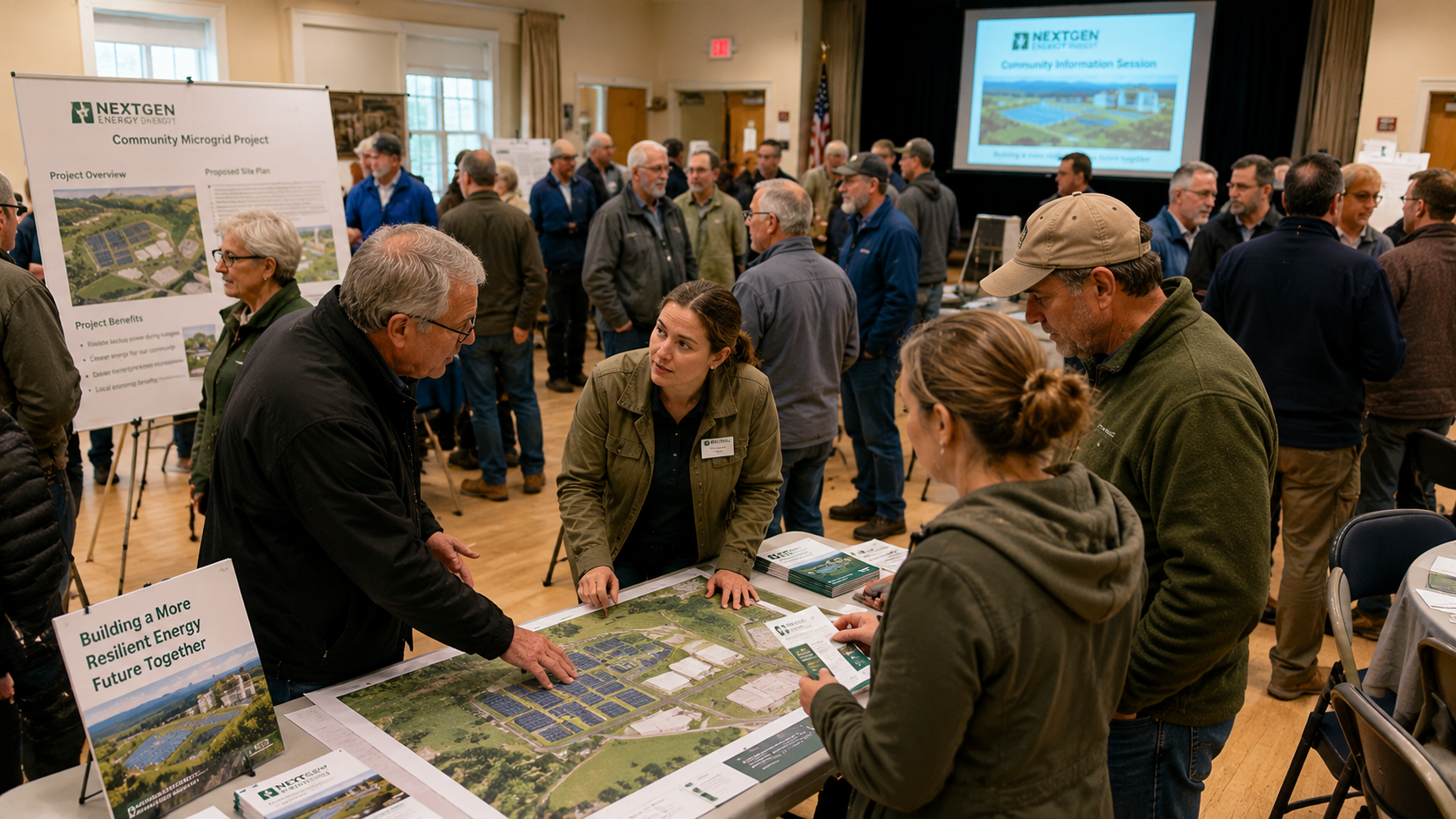
Deciding to join the Keep Lights On MA™ initiative is your community’s decision. The process is designed so residents shape the outcome — not just react to it.
The FSA isn’t a commitment to build. It’s a commitment to study — and to include the community in that study. The feasibility process is specifically designed to answer the questions residents care about most.
The feasibility study includes load analysis for all municipal facilities and projects expected electricity cost savings versus your current costs — specific to your community’s actual energy use.
The feasibility assessment includes siting analysis, visual impact studies, and community input on placement preferences. Designs are developed to fit the character of New England cities and towns.
HERO Hubs use proven, commercial-grade technology — the same systems used by hospitals and military installations. Safety documentation is part of the feasibility package.
Your municipality does. Town Meeting (or council, depending on your form of government) has veto power at every phase gate. No binding decisions are made without a public vote.
Full environmental review is built into the feasibility and design phases — including wetland, habitat, and stormwater assessments. The model does not require clear-cutting forested land.
Communities don’t have to choose between green spaces and green energy. The siting approach prioritizes disturbed land, brownfields, capped landfills, and rooftops — not pristine natural areas.
Every finding from the feasibility study is shared with residents before any vote. Financial models, engineering assessments, environmental reviews, and community input summaries — all available for review.
Community participation is a vital part of the process at every step. Here’s what that looks like:
This is the most important thing to understand: nothing moves forward without a Town Meeting vote (or council vote, depending on your form of government). The FSA starts the study. Town Meeting decides whether to proceed to design and construction. When residents vote yes, it’s because they’ve had the chance to ask hard questions, review real data, and decide for themselves.
This is the New England town meeting tradition. We built our process to work within it.